Elevating legal, transforming healthcare.
Healthcare visionaries outpace competitors, sharpen their edge, and make a bigger impact with our strategic, specialized approach to delivering legal services.

When you are breaking barriers in healthcare...
The Problem...the legal landscape is complex and changes often. You need experienced counsel that keeps pace.
Our SolutionOur tech-driven, business-savvy approach turns roadblocks into opportunities. Simplified insights and creative solutions keep you moving forward.
The Elevare EDGE
A Smarter Approach to Legal Strategy
Expertise That Cuts Through Complexity
With deep healthcare regulatory insight and real-world experience, we anticipate challenges, mitigate risk, and deliver solutions that work across all 50 states and global markets.
Expertise That Cuts Through Complexity
With deep healthcare regulatory insight and real-world experience, we anticipate challenges, mitigate risk, and deliver solutions that work across all 50 states and global markets.
Dynamic, Business-Minded Solutions
Our approach combines legal precision with your vision to deliver practical solutions that align with your goals.
Dynamic, Business-Minded Solutions
Our approach combines legal precision with your vision to deliver practical solutions that align with your goals.
Guidance Without the Friction
Legal should fuel progress, not slow it down. Where others say “no”, we ask, “how”?
Guidance Without the Friction
Legal should fuel progress, not slow it down. Where others say “no”, we ask, “how”?
Efficiency That Drives Quality
We invest in the latest AI tools, build streamlined workflows, and continue to evolve our business practices to deliver high quality, tech-enabled legal support.
Efficiency That Drives Quality
We invest in the latest AI tools, build streamlined workflows, and continue to evolve our business practices to deliver high quality, tech-enabled legal support.
Who We Serve
Elevare Law partners with innovators and industry leaders shaping the future of healthcare.
A Quote from Our Founders
“Our firm isn’t just about solving problems—it’s about creating opportunities for lasting impact."


Rebecca Gwilt & Kaitlyn O’Connor
Founders
Testimonials
The Proof Behind Our Promise
Maintain your edge with all things healthcare legal, policy, and tech.


Watch the Video
Listen to the Podcast
Watch the Video
Watch the Video
Listen to the Podcast
Read the Article
Read the Article
Resources
Maintain your edge with all things healthcare legal, policy, and tech.
Federal Corporate Practice of Medicine (CPOM) Ban Introduced
If this bill ever became law, the MSO/PC structure underneath most of today's healthcare companies wouldn't survive it.

Elevare Law Welcomes Healthcare Legal Strategist Tim Gutwald as Partner
Elevare Law, the firm built for healthcare and healthtech visionaries, is proud to announce the addition of Timothy Gutwald as a Partner. A seasoned legal strategist and fierce advocate for innovation in healthcare, Gutwald deepens Elevare's bench with his sharp regulatory mind, national expansion expertise, and passion for tech-enabled models.

The Rise of Telehealth 'Pill Mills'
The elderly patient’s blood pressure had been dropping for weeks, and Chad Wittekind, his primary care provider, couldn’t figure out what was wrong. He had upped the dosage of one medication and added another, but couldn’t manage to regulate it.

CPOM Isn't Your Only MSO-PC Risk. It's Not Even the Scariest One.
What DOJ's Campus Eye declination and indictment reveal about the fee-splitting and anti-kickback risk built into every MSO-PC model.

Elevare Law Welcomes Aizaz M. Chaudhary as Junior Partner
Elevare Law, a law firm built for healthcare and healthtech visionaries, is proud to announce the addition of Aizaz M. Chaudhary as Junior Partner. A seasoned healthcare attorney with both law firm and in-house experience, Aizaz adds to Elevare’s growing team of lawyers with a rare combination of legal, operational, and business perspective.
The Peptide Gold Rush is Almost Here - And the FDA Just Overruled Its Own Scientists
Back in April, we asked whether you were ready for the peptide gold rush. The answer just got a lot more urgent. This month, an FDA advisory committee broke with the agency’s own scientists and voted to move six popular peptides one big step toward the compounding market.

One Brief, Two Settlements, $6 Million: California's CPOM Trend is Real Now
At the start of May, we warned that the California Attorney General’s Brief in Art Center Holdings vs. MCE was a warning for healthcare companies structured as an MSO/PC. At the end of May, we told you that California was moving from warning to enforcement.

California Just Moved From Warning to Enforcement on MSO-PC Structures
What the Aspen Dental settlement, the AG's amicus brief, and the CMA's response mean for telehealth companies operating in California
.png)
Using Ambient AI Scribes in Healthcare: Consent, Privacy, and Compliance Lessons from the Sharp HealthCare, Sutter Health, and MemorialCare Lawsuits
In an effort to ease the workload of providers and address provider burnout, health systems and medical groups have turned to ambient AI scribe tools. One study found a 21% adoption rate while industry estimates put the adoption rate at 25-35%. As with any technology, implementing AI scribes is not without risk. Two recent class action lawsuits against Sharp HealthCare, Sutter Health, and MemorialCare highlight exactly what is at stake and provide lessons on how healthcare providers can roll out AI scribe tools in a compliant way.

The California AG Just Told You Which MSO-PC Contracts Are a Problem
"Wait—does this mean our continuity agreement is illegal?"

Documentation in the Value-Based Care Era: A Compliance Roadmap for Behavioral Health Providers
In this session, healthcare attorney Kaitlyn O'Connor — Co-Founder and Partner at Elevare Law — will break down exactly what value-based care demands from your clinical documentation and where the gaps she sees are creating the most exposure.
Are You Ready For The Peptide Gold Rush?
Whether it’s Robert Kennedy, Jr. on the Joe Rogan podcast, Martin Shkreli debating Superpower’s Max Marchione, the New York Times, Wall Street Journal here, here, and here, or FDA warning letters, it seems like everybody is talking about peptides. After years of murmurs, grey markets and FDA warning letters it seems like the peptide gold rush is upon us.

The AI-Native Practice Is Here: Practitioners and Vendors Building the Future of Healthcare Together
After 10+ years advising digital health companies from both sides of the provider-vendor divide, I'm seeing something I've never seen before.

The FDA Exemptions Digital Health Companies Are Using to Skip Clearance in 2026 (Part Two: Clinical Decision Support Tools)
The digital health landscape is undergoing a seismic shift—and January 2026 marked a major milestone. The U.S. Food and Drug Administration (FDA) released two transformative guidance documents, one focused on Clinical Decision Support (CDS) software and the other on General Wellness Products.

The FDA Exemptions Digital Health Companies Are Using to Skip Clearance in 2026 (Part One: Wellness Products)
The digital health landscape is undergoing a seismic shift—and January 2026 marked a major milestone. The U.S. Food and Drug Administration (FDA) released two transformative guidance documents, one focused on Clinical Decision Support (CDS) software and the other on General Wellness Products.

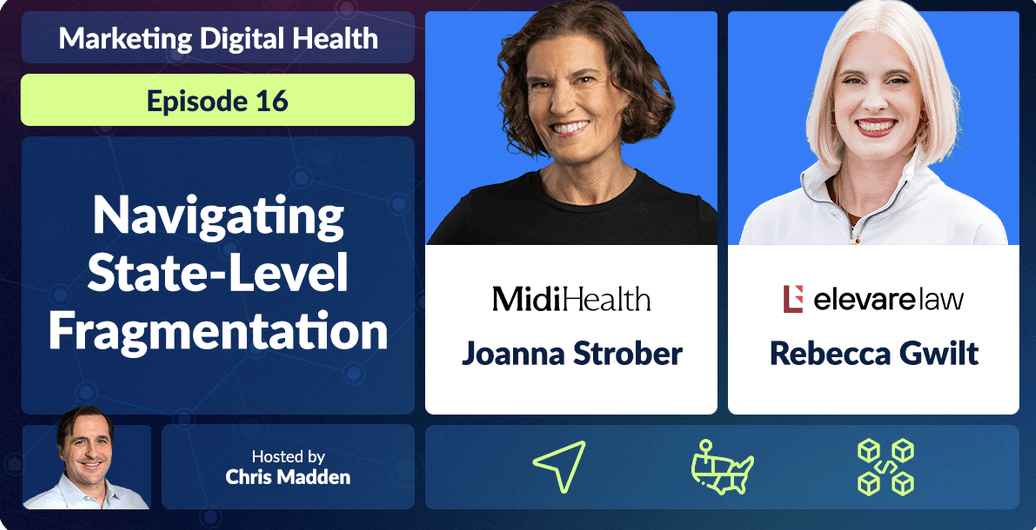
Marketing Digital Health Podcast Episode 16: Navigating State-Level Fragmentation
Understand the marketing implications of varying state regulations and how to craft acquisition strategies that scale across fragmented U.S. markets.
How modern law firms are evolving with PointOne: Case Study with Kaitlyn O'Connor
Elevare Law is a healthcare innovation law firm working with companies throughout the healthcare industry, including AI, telehealth, care management, and data analytics companies.

CMS’s New ACCESS Model - An Open Door For Healthcare Technology
The ACCESS Model, announced December 1, 2025, is a pilot payment model from the CMS Innovation Center (CMMI) that will test outcome‑aligned payments (“OAPs”) as a method of incentivizing providers treating Original Medicare beneficiaries to adopt technology that improves care. The ACCESS Model is the clearest signal yet that CMS is finally ready to pay for outcomes instead of volume and recognizes the important role that healthcare technology can play in improving outcomes and access to care. This is the opportunity that healthcare visionaries have been waiting for.

RPM & RTM Reimbursement in 2026: Where the Final Rule Meets Reality—And Where It Doesn’t
Added reimbursement for fewer days of data will improve access for patients who don’t require 16 or more days of readings in a month. New codes for lower-touch treatment management should allow care teams to spend more time interacting with and managing patients with more complex needs. But one glaring gap remains.

From Pilot to Purchase Order: Turn Validation into Scalable Contracts (Without Tripping Compliance)
This is the final piece in a three-part series on selling, scaling, and succeeding in healthcare—distilled from the class I teach at Texas Medical Center Innovation, Plug and Play, TechStars, and accelerators nationwide. In Part 1, we mapped healthcare's multi-actor buying process and positioned around outcomes that matter. In Part 2, we designed revenue models that align incentives and survive compliance using a five-step framework.

Revenue Models That Actually Close in Healthcare: A 5-Step Framework That Aligns Incentives
This is the second in a three-part series on selling, scaling, and succeeding in healthcare—distilled from the class I teach at Texas Medical Center Innovation, Plug and Play, TechStars, and other accelerators nationwide.

Stop Pitching. Start Helping: Selling Into Healthcare When Everyone Can Say “No”
This is the first in a three-part series on selling, scaling, and succeeding in healthcare—distilled from the class I teach at Texas Medical Center Innovation, Plug and Play, TechStars, and accelerators nationwide. Over the last decade, I've watched brilliant founders with game-changing products get stuck in healthcare's buying maze, not because their technology wasn't ready, but because their go-to-market wasn't.

The CPOM Crackdown: Why Telemedicine Startups Should Be Watching State Laws Closely
"Wait—so our MSO model might not be legal in Oregon anymore?" That’s the question a founder of a multi-state telehealth platform asked after Oregon passed SB 951. And she wasn’t alone. Across boardrooms and VC Slack channels, healthcare operators are scrambling to decode a fast-moving regulatory trend: a nationwide wave of Corporate Practice of Medicine (CPOM) legislation.

Value-Based Safe Harbors: Strategic Opportunities for Digital Health Companies
The shift toward value-based care has prompted a significant overhaul in how health tech companies can legally collaborate with providers and payors. And while it has been a long time coming, we're finally seeing real shifts in the way our clients engage with their provider customers and patients.

Introducing the Elevare Canopy™: The expertise you need to grow, all in one place
Scaling a healthcare business is equal parts thrilling and overwhelming. Regulations shift daily. Operations are stretched thin. Strategy demands precision. What most founders discover quickly is that it’s not enough just to have expertise, but to have access to the right knowledge at the right moment.
.png)
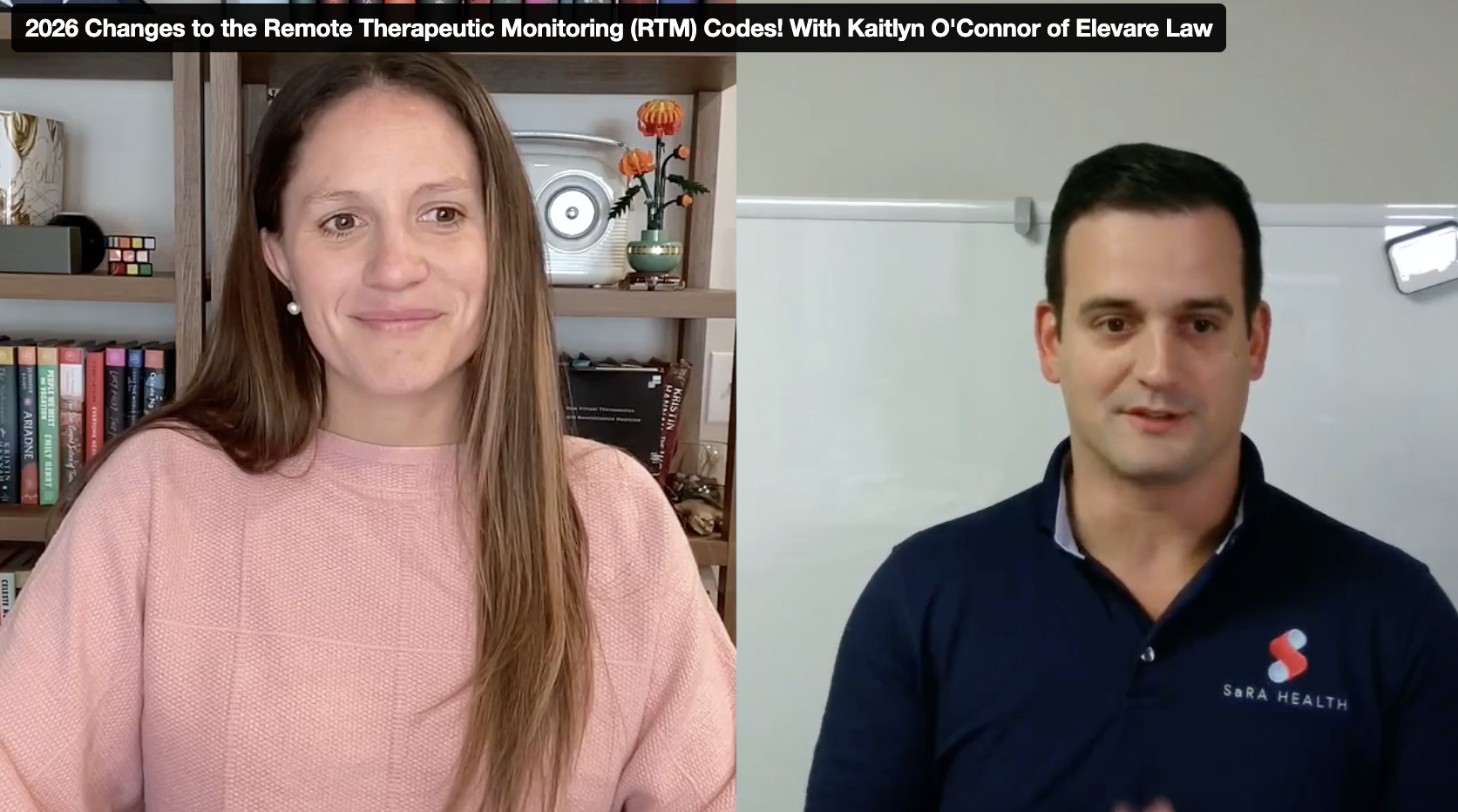
Kaitlyn O’Connor, Elevare Law Co-founder, Speaks with SaRA Health about Expansions to RTM Reimbursement for 2026
What’s new with RTM reimbursement in 2026? Kaitlyn O’Connor of Elevare Law joins SaRA Health to discuss a new code that lets providers bill for 2–15 days of patient data. She also dives into why CMS needs to align rules with real clinical insights, and how consistent data transmission can show meaningful improvement for physical therapy patients
The FDA Puts Telehealth Platforms and GLP-1 Advertisers on Notice
Reminiscent of the FTC’s actions around online tracking technologies, on September 9, 2025, the FDA sent hundreds of warning letters to pharmaceutical companies, compounding pharmacies, and telehealth providers. The FTC letters were quickly followed by enforcement actions against telehealth providers like Betterhelp and Cerebral, and multimillion-dollar settlements. While it remains to be seen what, if any, actions the FDA will take next, pharmacies and telehealth companies, especially those marketing GLP-1 drugs, should change how they talk about prescription drugs on their websites and social media pages and in advertisements.

The Government Shutdown: What Telehealth Providers Need to Know
The federal government shut down on October 1, 2025, after lawmakers failed to reach a funding agreement.

How America’s AI Action Plan Opens New Regulatory Flexibility for Digital Health Innovators
With the recent unveiling of America’s AI Action Plan, the U.S. government is putting AI innovation at the center of its economic, defense, and technological strategy. While the plan is geared toward government execution, its ripple effects for the private sector—especially digital health companies—are undeniable.
.jpg)
Major Changes Ahead for Remote Monitoring CPT Codes: Breaking down CMS’ Proposed Changes to RPM and RTM for 2026
If you know me, you know that the MPFS Proposed Rule Comment Period each summer is my favorite time of year for digital health. And after a few years of little-to-no excitement in the remote monitoring reimbursement environment, CMS is proposing big changes for 2026.

“So... Can We Still Use Meta Pixel?” Health Marketing After GoodRx, BetterHelp & the AHA (Partial) Victory
The CMO of a national telehealth network is excited. “We finally have a campaign people love—targeted content based on condition pages users visited. Can we scale it?”Her privacy officer winces. “Well... it depends. Did the user log in? Submit anything? Or just browse?”“No login. It’s our main web page. They just submit a form requesting more information,” the CMO replies. “All we have is an email address.”“Okay. Then maybe. But we’re still in that weird limbo thanks to OCR’s pixel guidance... even after the AHA lawsuit.”And just like that, the campaign’s on hold again.

CMS Is Asking You How to Fix the Rules That Are Blocking Digital Health Innovation
You’ve seen this story before. Maybe it’s your story. A company builds a tech-enabled service for a high-need population—say, dual-eligible patients or those with multiple chronic conditions. They develop a centralized platform that connects patients, primary care, specialists, and community supports. They streamline communication and workflows across fragmented providers.They reduce ER visits and hospital admissions with proactive, data-driven coordination.

Evolving State Privacy Laws and the Impact on Digital Health Innovation
In this episode of AHLA's "Speaking of Health Law" podcast, Omenka Nwachukwu of Clearwater speaks with Kaitlyn O'Connor, Co-Founder and Partner at Elevare Law, about the growth in state privacy laws covering wide ranges of health data and how digital health companies are being impacted. They discuss the role state legislation is playing in addressing gaps left by federal health care privacy laws, how state privacy laws are going beyond HIPAA in certain areas, and trends in state regulatory activity.

Elevare Law confidently crafts contracts that strengthen clients’ positions
Discover how Elevare Law integrates AI tools like Spellbook to streamline workflows, scale efficiently, and offer forward-thinking legal support. This feature delves into their approach to building a modern, tech-savvy law firm.

Elevare Law Launches
New on The Health Care Blog: What makes Elevare different, and why the industry needs a legal partner that thinks like a founder.

Female-Founded Law Firm, Elevare Law, Launches to Support Health Tech and Digital Health Clients
We’re thrilled to be featured in Fierce Healthcare! Check out how Elevare is changing the legal game for health tech companies—and why our approach is built for speed, scale, and smarter strategy.

Care Management Reimbursement Demystified: A Strategic Guide for Digital Health Leaders
Care management services are more than a revenue opportunity. Done right, they drive measurable improvements in patient outcomes, reduce the total cost of care, and strengthen provider-patient relationships. The best part? They often represent activities your target customers are already doing but not getting paid for *yet*.

What the White House’s New AI Rules Teach Digital Health Companies About Building, Selling & Buying AI
Learn how digital health companies can use new federal AI guidance to strengthen compliance, improve procurement, and avoid risk. Insights from OMB Memos M-25-21 and M-25-22.

Cracking the Code: How to Sell Digital Health Solutions to Healthcare Buyers
This blog is your cheat code. Built on years of experience closing deals with some of the biggest names in healthcare, I’m pulling back the curtain on how to actually get digital health deals done—and why so many sellers stall out before they even get to contract.

Elevare Law Launches to Transform the Legal Experience for Healthcare Visionaries
Elevare Law, a forward-thinking law firm built exclusively for healthcare and healthtech visionaries, officially launches today, offering a smarter, faster, and more strategic legal experience for those reshaping the future of healthcare.

The Modern Telehealth Founder’s Dilemma
The telehealth industry has evolved—fast. New business models have emerged, regulatory landscapes have shifted, and companies now have more options than ever when structuring their virtual care businesses.

Introducing Elevare Law
At Elevare Law, we believe that healthcare and innovation have the power to transform lives—and we’re here to help our clients harness that potential. Elevare Law is built to serve the unique needs of healthcare and technology companies that are pushing boundaries, tackling complex challenges, and aiming for strategic growth. We’re not just another law firm; we’re your partner in building sustainable, impactful transformation that breaks barriers so we can all live better.

Avoiding the AI Bullseye: How Digital Health Companies Can Navigate FTC Scrutiny and Shifting Federal Policy
FTC enforcement on AI is ramping up as federal policy shifts. Learn how digital health companies can avoid legal risk using NIST’s AI Risk Framework and recent enforcement case lessons.

Legal Strategy for What’s Next
Partner with experts who understand your vision.